
Is common normal? Is normal healthy?
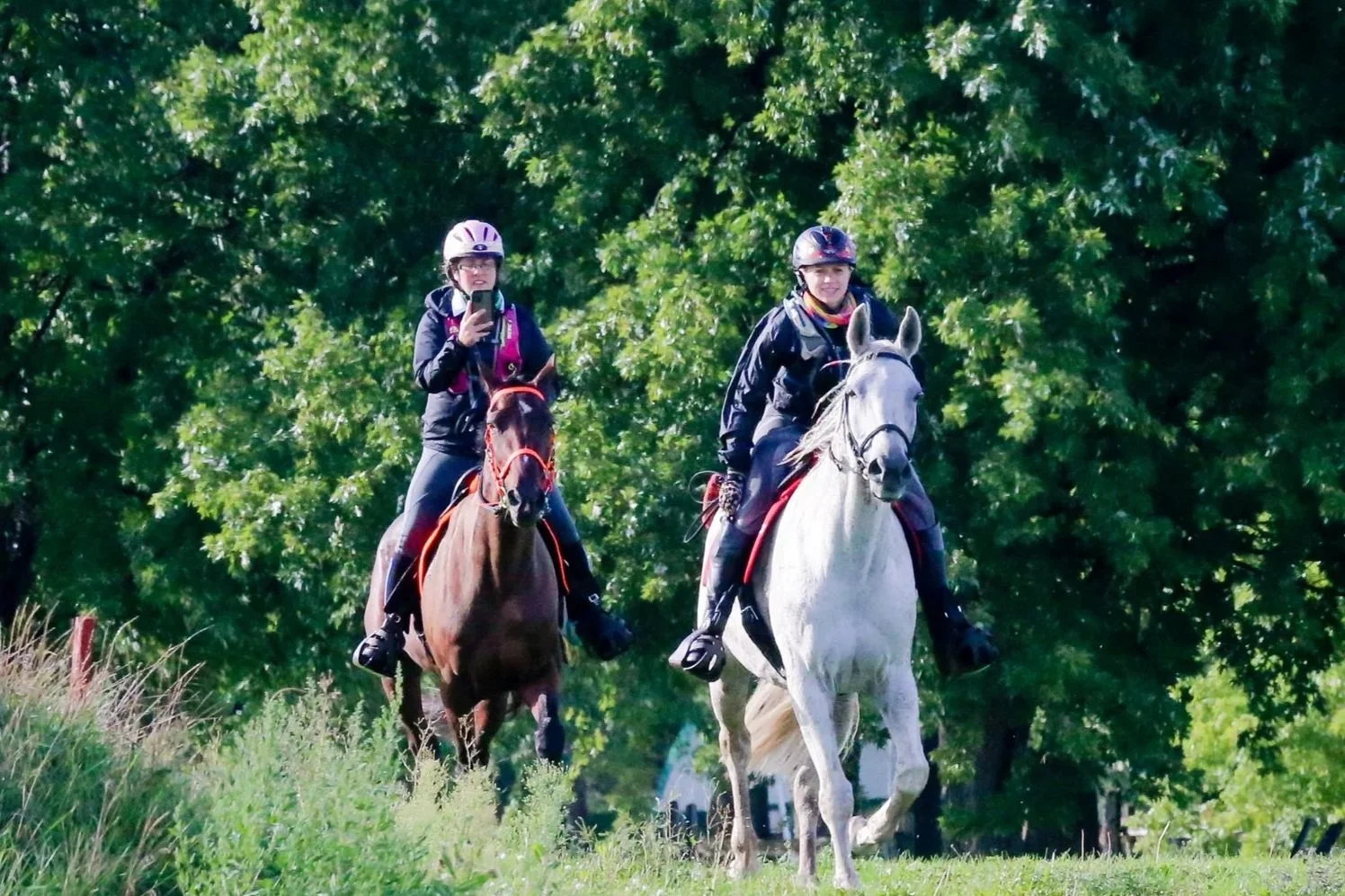
Ashley and I at Calaboogie endurance ride in the 75 mile and 100 mile distances.
I want to send a big thank you to my friend Ashley for inspiring this topic. It’s something I have thought about a lot but never got my butt in gear to write about until now. If you don’t already know, Ashley has a new podcast “Head to Hoof” which focuses on horse healthcare, specifically how hoofcare affects the horses body and the body affects their hooves. Its very accessible and actionable. I highly recommend you give her a follow.
Ashley spoke about the things we accept as normal in our horses because we see them so often in the horse population, but how many of these things are not normal, how we have normalized them, and what we can do to start reshaping how we look at our horses to understand them better and improve their lives.
I see this so much in the rider as well. Things we accept as normal because they are common. Then how there normal becomes the standard for healthy, but we can 100% do better by ourselves for these things. So in no particular order, I wanted to list some of the main offenders I have seen in myself, clients, peers, friends, family and general public that we accept as normal, but are actually NOT!
1) Weight gain, body composition changes, new dispersions of fat after menopause
Its true, our hormones change after menopause which can lead to weight gain and higher amounts of visceral fat (this is the fat that is most associated with negative health outcomes). Hormonal changes are the very definition of menopause. However, significant weight gain is not necessarily normal and something you just have to accept. Thankfully, we are experiencing a revolution in women’s health research which is helping us better understand how to manage the symptoms of menopause. It’s about time! While the research is still coming in, lots of myths are being dispelled surrounding women’s health particularly in this stage of life. If you have the time, Gabrielle Lyon is a great listen, particularly this episode specifically related to menopause. She is far more educated and experienced in this way (no, I am not at that stage in my life yet… but I am preparing by arming myself with knowledge!) so I will let her do the talking. In summary though, my takeaways are that
we should not be afraid of hormone replacement therapy as we once were & we should consider it early
we should get bloodwork regularly to determine OUR normal. Yes, our markers may fall into the “normal” range for the population, but remember that the majority of the population are NOT healthy, so normal does NOT equal healthy, and its more important to know what is normal for you, than what is normal for a large population
we should be training and eating for muscle - muscle is THE best moderator of hormones without clinical intervention. This is absolutely in YOUR control.
2) Knee pain in riders
Oh I hear this one SO much in riders. Everyone has bad knees. It must just be a weakness of the human body right? I used to have “bad knees” too which seriously limited me when I first started riding endurance. Then I changed saddles. Then I started strength training. Then I started running (YES, running… which everyone says is SO bad on your knees).
The thing is, knee pain while common, is not normal. With proper mechanics, the knee is no stronger or weaker than any other part of the body and is built to withstand workloads. The key point here is to note the phrase PROPER MECHANICS. The knee is a hinge joint. It is meant to go forward and back and that is it. When the knee is improperly loaded, it starts to wear unevenly which leads to pain, arthritis and injury risk.
Riders are particularly susceptible to this because the nature of our sport means we don’t load our knee properly. Instead of walking around in good posture with our legs directly under us, we strut around like old cowboys - knees sticking out. Nobody has a horse so skinny that our legs fall directly under our hips (I hope!) so this is naturally going to happen. What we are failing to do however is to exercise the opposing muscles to bring our legs back into alignment for the times we are not in the saddle. Then the repetition continues to grind on that knee digging us deeper and deeper.
When I hear knee pain, generally where I start with my clients is looking above and below. Since the knee is a simple hinge joint, there isn’t much that can go wrong there. Typically (unless you have an acute injury like being kicked in the knee by a horse) the problem actually comes from the hips or the ankles. We will work on those places first - gaining strength and mobility in the joints that are supposed to move through multiple planes.
Another thing I have all my clients practice are single leg movements. My favourite (and everyone hates me but loves me for this) is the bulgarian split squat. We practice organizing our body and weight over one leg and slow controlled movements as we descend and ascend through the movement. This helps train the little stabilizer muscles that will protect the knee and are probably not chipping in currently, but it also makes us acutely aware of the alignment of our legs. Taking time to notice our movement patterns is highly valuable because we can start applying them to the repetitions in our daily life - walking, going up and down stairs, even mounting.
Yes old age happens and we can’t necessarily undo what we have done in the past, but it is never too late to start developing better movement patterns and experience the benefits of such. And as I mentioned for my own personal experience - check the ergonomics of your saddle too. All these things worth together to prolong your joints and keep you in the saddle to your later years.
3) Sarcopenia (muscle loss) and Osteoporosis in mature riders
After about the age of 30, we start losing muscle and bone mass. Approximately up to 1% per year on untrained individuals per most studies. Yikes, that’s too young to be giving up in my opinion! Muscle does so much for our bodies, particularly as athletes, and bone health is absolutely critical as we age. So is there hope for us?
Absolutely there is! The studies also show that regular resistance training improves both of these. Not only can you slow the rate of the degradation, but you can actually reverse them with the right training and nutrition. Even if you are in your 70s, 80, 90s… you CAN build muscle and improve bone health.
Lets talk first about prevention early on - ladies in your 20s, 30s and 40s… EAT! We have been told so long that we need to diet and be skinny to be acceptable in this world, and it just isn’t right. Eating 1200 calories per day is going to severely impair your ability to put on muscle and preserve bone. Don’t be afraid to eat more. You are an equestrian, you are active, you NEED the energy to perform your activities and live well. Focus on protein, as much as 1g per pound of body weight per day, colourful fruits and vegetables, clean fats, and complex carbohydrates. If you need to eliminate something… make it processed foods. They do very little to fuel you and promote overeating.
Strength training sends the signal to then use those calories and nutrients to build those strong bones and muscles. Make sure make strength training a part of your lifestyle. Yes, I mean go beyond habit - you are an athlete: strength training is your lifestyle and identity… not just something you do. Be proud of this! And don’t feel like you have to offset your food by excessive cardio. Let that food work for you! Use the right tool for the job.
Even if you have already experienced sarcopenia and osteoporosis, the same rules apply. Eat to nourish, strength train with resistance. I hear a lot about walking - its great for many reasons, but it is not enough to nip these in the bud. You need load and this means you need to lift some weights… but you can do it! And you will love the results!
4) Bloating, low energy after eating
The funny thing about GI stuff, is sometimes we don’t even notice we feel off. We have conditioned ourselves to feel bad for so long that we don’t even know what good feels like. I have totally been guilty of this in the past and it has taken me a long time to reconnect with the feelings my body gave me that I formerly shoved in the “thats just normal” category when it comes to food.
Food is supposed to nourish and energize us, not make us feel like we need to be rolled out of the restaurant. Feeling crappy after a meal is not normal, it’s your body’s signal that something is not quite right. What that something is, well that takes a lot of investigation and can be a frustrating process. I think sometimes it’s so frustrating to figure out, that we are happy to just normalize because in a way feeling lousy is easier.
However, once you take the time to go through the process, you see the ripple effect through the rest of your life. Having greater energy and less illness makes you resilient and able to tackle the things on your list. It boosts your confidence. It snowballs and before you know it, you are that “health nut” you once were skeptical of.
Something else that can be discouraging can be the outcome isn’t as expected. Here is a personal example. I was doing my best to eat healthy because I was sick of feeling lousy. I knew to cut out processed foods and limit my sugar. I was doing the right things, but every so often I was feeling like I was getting knocked out and felt so bloated and tired. Knowing this is not normal or healthy, I looked farther and determined I had an intolerance to Quinoa. Here I was eating what I am told is a healthy food, and feeling worse. Talk about being punished for trying to be good! I cut out quinoa and haven’t had that reaction since. Imagine if I had used that as evidence to continue to normalize that no matter what I ate, I would feel lousy. I would never feel as good as I do today!
It would be so easy to give up when making changes and accept that some level of low energy or bloating is normal, but I didnt. Sometimes the culprit isnt what you expect and there are so many things it could be (food intolerance is just one of MANY possibilities). The key is just noticing how you feel. You know you should eat healthy but you might still be looking at it like a “must do” or a punishment. Instead, focus on more than the taste experience. What happens after? How does it satisfy you? Are you noticing trends? Looking beyond helps encourage you forward here.
And hey… I know that if I eat a big cone of ice cream, I need a 15 minute nap immediately after as I will have a sugar and lactose crash… that sucks, but I can still enjoy the ice cream knowing what I am getting myself into (and knowing I have time for that nap lol)
5) Generalized exhaustion and exercise making you tired
Horse life is tiring, just accept that this is your life now!
I have this horse girl avatar in my mind on this one, you know her. Shes the one who shows up to the barn on 4 hours of sleep with her second venti triple mocha almond milk extra sugar, no whip frappucino as her breakfast. She jumps on her horse and goes hard until mid afternoon when she realizes that she hasn’t had anything to eat since “breakfast.” Her energy is low and she grabs a diet coke and some gummy bears to tide her over while she agonizes over her horses’ nutrition program and mucks some stalls. By 4pm shes a slug, she packs up to go home but gets caught chatting by the tackroom door with a friend and ends up leaving an hour later than expected, too tired to make dinner she stops through the drive through for a burger and fries on the way home. She flops down on the couch and reads my post that says “hey equestrian, you should really strength train!” and thinks “yeah if only I had the energy, I already do barn chores and ride horses and that is clearly a workout because I am so worn out now”.
Rinse and repeat.
I know you see what is wrong with this situation when looking in from the outside but so many of us live this way and accept that this cannot change.
So the first point I want to raise here is that exercise should energize - good food too (see previous point!). If you are doing the correct dose of exercise for YOUR situation, you should find it gives you more energy and focus to take on your day. This is why nearly all high performing CEO’s will tell you they start their day with exercise.
Most people have tried to start an exercise routine, they understand that there are benefits to this and they have good intentions. I’m sure you have too, but if at the end of the day you are so sore and tired you can’t live your life, then something is wrong.
In favour of not repeating myself too much, I want to direct you to to a couple other posts where I wrote about exercise load and equestrians.
In this article I wrote about the minimum effective dose and why riders actually tend to benefit from a less is more (but you still need to do something) approach to their workouts. As riders we are already way more active than the general population, so our workout programming should absolutely look different
Then in this article, I spoke about my own experience with stress as I moved into my new farm. The thing is, we can build the best plan for your life today and it will work… for today! We need to be adaptive and understand that yes, workouts ARE a stress on the body. The body combines these stresses in one bucket and the thing is - stress makes us grow. But if that bucket is full, adding more stress in as exercise may cause it to spill over and we no longer reap benefits. Being able to tailor and modify our program is critical. If you start noticing signs of overtraining such as your workouts leaving you tired… its not normal!
This is a lot of trial and error, and continual check ins. Noticing is the first step.
Conclusion
While I could go on all day about things we have normalized as equestrians for our own bodies, I think the biggest takeaway is that we need to give ourselves permission to look into why we feel bad. You probably have heard my motto “you deserve to treat yourself as well as you treat your horse” and this is so applicable here! Most of what I listed is not a giant red flag, but those little things where you are “not quite right.” When your horse is NQR, you question why (or after listening to Ashleys podcast you are at least thinking about it now!). I want to encourage you to do the same thing for yourself. Take time to check in with yourself, do you feel absolutely, 100% good? Have you normalized operating at 80%? 70%? Even less? Give yourself permission to break these long held norms and look into what these signals are trying to tell you. Ask for help from professionals. Follow through with the care protocol. Check in with yourself again… did it work? Did it not? Keep going. You can do this!